

The OEM Manufactured Problem: Severe Inlet Corrosion.
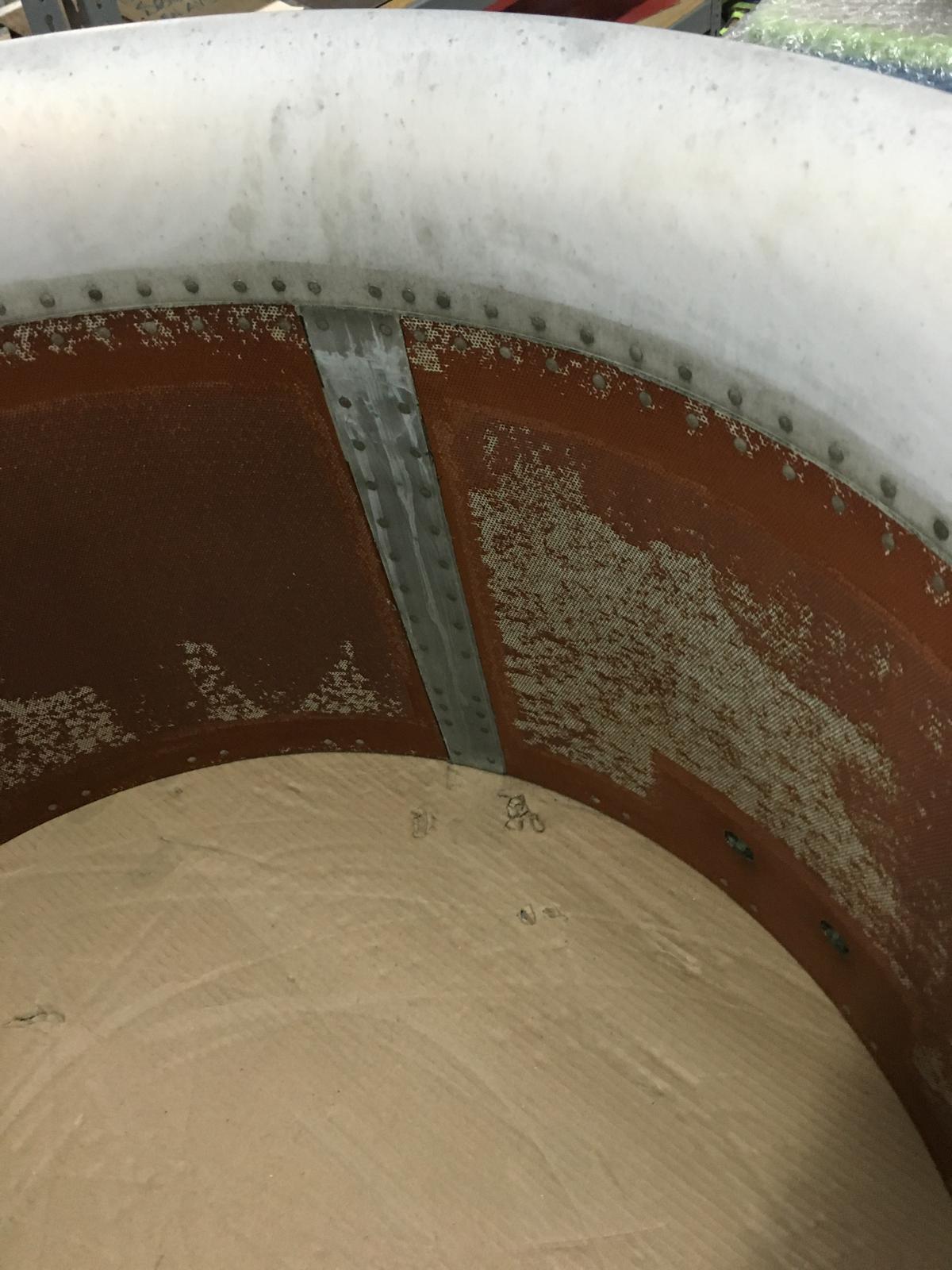
How the Corrosion Cycle Begins
The corrosion problem starts with the very system designed to make the aircraft quieter.
1. Higher-performing turbofan engines demanded quieter operation.
2. Quieter operation required additional acoustic treatment inside the inlet.
3. Acoustic screens were added over aluminum honeycomb panels.
4. The screen trapped moisture inside the cells.
5. Moisture initiated corrosion within the aluminum structure.
6. Corrosion led to adhesive disbonding, bubbling, screen detachment, and structural degradation.
The result: an unavoidable, fleetwide corrosion problem that worsens with age.
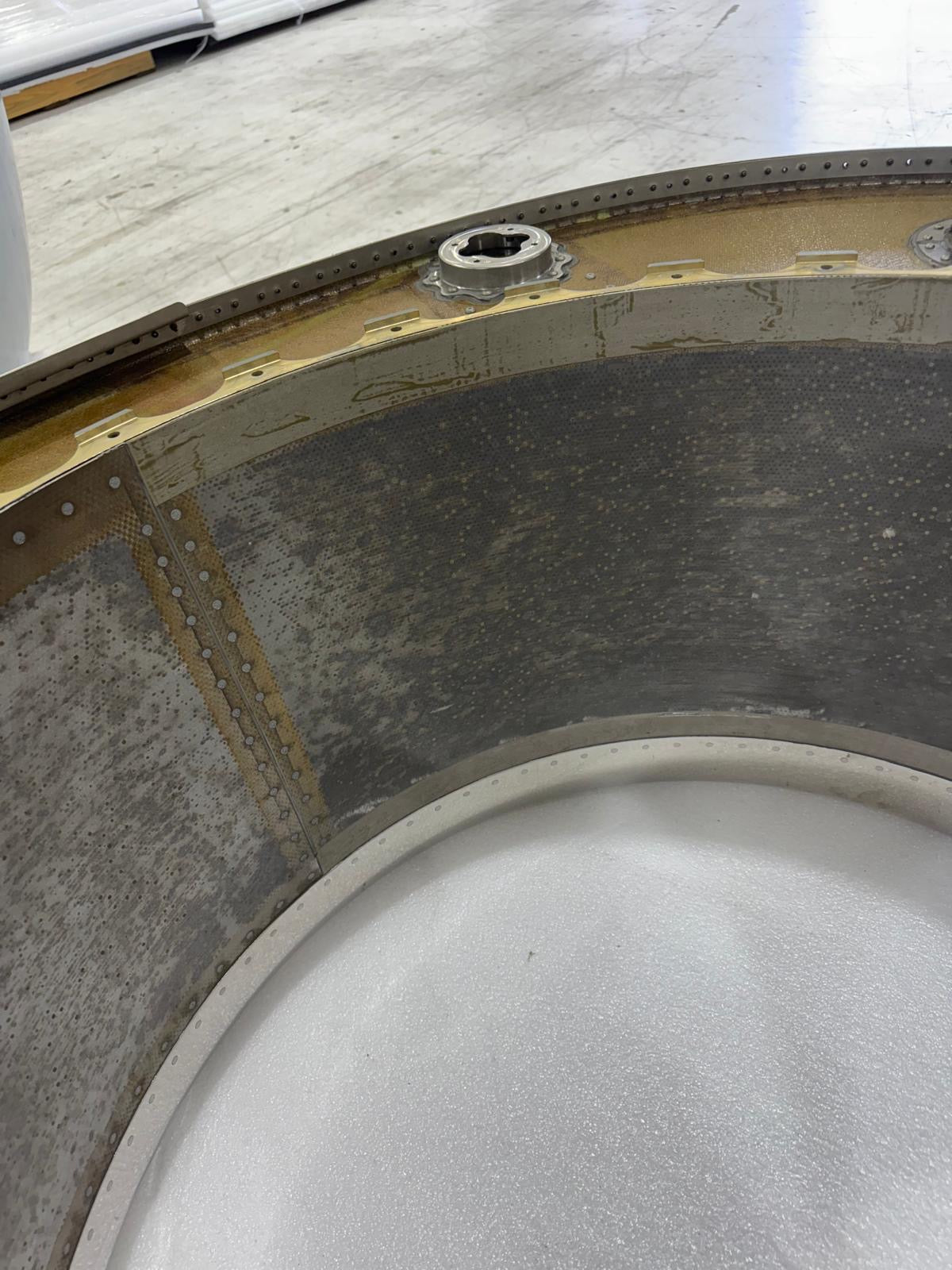
The Risk Beneath the Surface
Because corrosion begins inside the honeycomb cells, it cannot be fully removed through surface-level repair. Once the underlying structure is compromised, repair becomes temporary by definition.
Replacing the damaged inner barrel with a new OEM aluminum barrel may reset the clock, but it does not eliminate the cause. The same materials. The same design. The same moisture entrapment. The same eventual failure.
In severe cases, corroded metal or detached acoustic material can dislodge and feed through the engine — creating a serious safety concern in addition to the financial burden of recurring repair, inspection, downtime, and replacement.
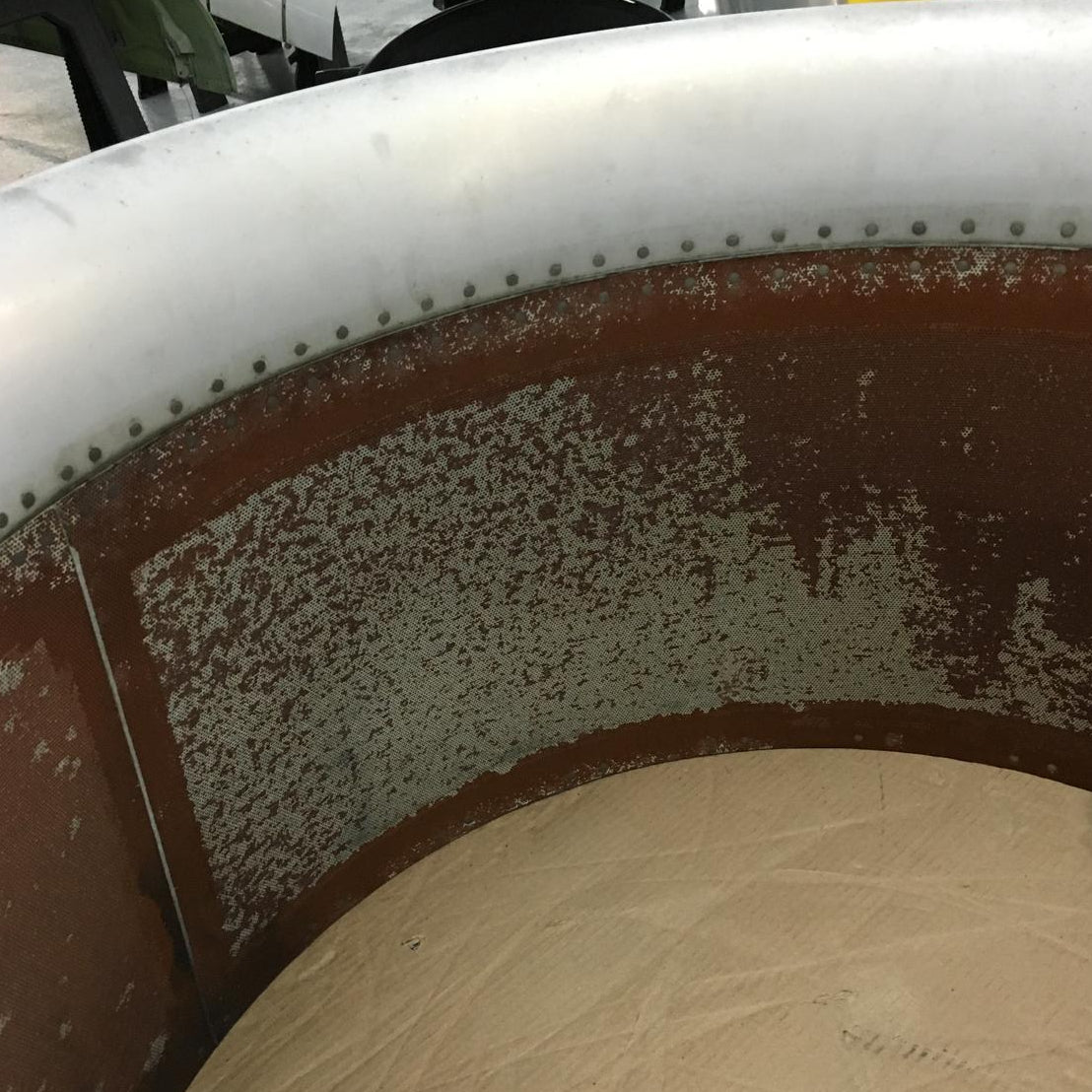
Repair Does Not Remove the Root Cause
Traditional repair or OEM replacement keeps operators trapped in the same failure cycle.
• Corrosion starts inside the honeycomb cells
• Surface repair cannot fully eliminate internal corrosion
• Repaired barrels have been known to fail again within 3–4 years
• OEM replacement uses the same aluminum construction
• The replacement barrel is exposed to the same moisture entrapment conditions
• The only guaranteed outcome is future corrosion
The problem is not simply the damaged barrel.
The problem is the material system itself.
The Solution Starts and Ends with QTA
QTA recognized the inner barrel corrosion problem for what it was: a materials failure caused by trapped moisture in an aluminum acoustic structure.
At an operators conference, during a workshop focused specifically on inlet cowl corrosion, it became clear that conventional repairs and OEM replacement were not solving the problem. They were only repeating it.
For QTA, the answer was not to improve the band-aid.
It was to remove the cause.
With nearly 40 years of experience in advanced composites, acoustic technology, and hush kit engineering, QTA developed a permanent upgrade: a corrosion-proof Carbon Graphite Composite Inner Barrel designed to replace the vulnerable OEM aluminum structure entirely.